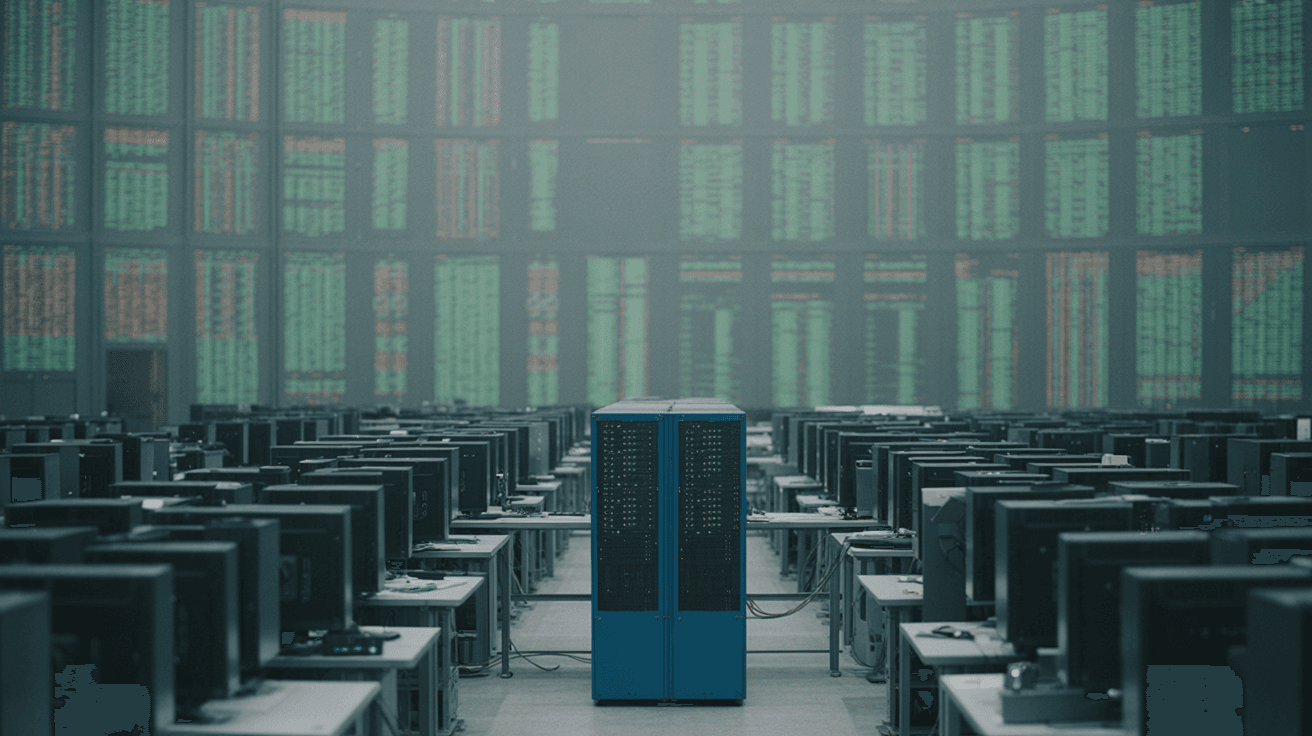
Running infrastructure for over 80 proprietary trading firms is more than just managing software. It’s a critical operation where every millisecond of latency, security gap, and minute of downtime affects profits directly. A two-second execution delay in volatile markets can lead to significant losses, while a security breach risks client trust and regulatory scrutiny. TradeLocker functions in this demanding environment, where performance, security, reliability, and compliance are essential.
Proprietary trading firms require infrastructure that handles extreme volume spikes and responds to sudden market events without interruption. In this sector, downtime can lead to a substantial business failure.
Quick Verdict

Best for:
- Proprietary trading firms needing institutional-grade execution and compliance
- Operations where sub-second latency and 24/7 uptime are vital
- Multi-trader environments requiring detailed risk management and audit trails
Not for:
- Retail traders looking for user-friendly charting or educational features
- Firms at a small scale with relaxed regulatory requirements
- Platforms that prioritize simplicity over execution performance and security
The numbers:
- 80+ proprietary firms using the platform
- 4.6-star Trustpilot rating from around 2,200 reviews
- Sub-second execution targets
- 24/7 operational support
Last verified: July 27, 2026
What It Does
TradeLocker serves as the execution and operational backbone for proprietary trading firms. The platform handles real-time order routing, aggregates market data feeds from various sources, maintains regulatory-grade compliance logs, and provides operational visibility for active traders.
Its core functions include:
Order Execution Engine, This routes and matches orders with minimal latency, allowing traders to enter and exit rapidly across different asset classes.
Market Data Aggregation, The platform collects, normalizes, and distributes real-time price and volume data from multiple exchanges, ensuring traders receive consistent information.
Compliance and Risk Infrastructure, It maintains comprehensive audit trails of all trading activity and communications, enforces risk controls, and generates the necessary regulatory reports.
With over 80 prop firms utilizing the system, TradeLocker showcases its capability to support diverse trading strategies and market conditions. Understanding how to choose the right platform involves evaluating execution speed, data accuracy, and compliance rigor, vital components in proprietary trading.
How It Actually Works

Architecture and Execution Flow
TradeLocker’s architecture is designed for minimal latency and maximum reliability. When a trader places an order, the system processes the instruction, validates it against risk parameters, routes it to the appropriate liquidity provider, and reports the fill back to the trader’s terminal, all within sub-second timeframes.
The execution flow is as follows:
Order Reception, Trader input is received at the closest entry point to minimize network delay.
Risk Validation, The order is checked against real-time risk controls, including position limits and margin requirements.
Liquidity Routing, If the order passes risk checks, it is routed to the optimal exchange or liquidity provider.
Execution and Fill, The order executes, and the fill is reported back to the trader’s terminal while being recorded in the compliance log.
Position Update and Reporting, The trader's P&L and risk metrics update in real time across all terminals.
All steps must function reliably, especially during periods of market stress or volume spikes.
Real-Time Data Flow
Market data drives every trading decision. TradeLocker aggregates feeds from different exchanges, normalizes market prices, and distributes this unified feed to all traders. This ensures that all users see the same market picture simultaneously, eliminating latency discrepancies.
Redundancy is key; if one data feed fails, backup feeds engage automatically. If a server in the data aggregation process goes down, another takes over without affecting the user experience.
Risk Management Framework
Risk controls are enforced at three levels and cannot be overridden by traders:
- Firm-level limits, Total exposure caps, daily loss limits, and maximum position sizes across all traders.
- Desk-level limits, Loss limits and exposure limits for specific teams.
- Individual trader limits, Maximum position sizes, drawdown limits, and leverage rules.
Orders breaching any limits are automatically rejected, preventing the need for manual intervention during volatile markets.
The Numbers
Uptime and Availability
TradeLocker aims for sub-second execution, meaning the entire order-to-fill cycle should complete in under one second during normal conditions. The platform operates around the clock to cover global trading hours across various asset classes. Downtime directly equates to missed opportunities and potential losses for prop firms, necessitating robust infrastructure and ongoing operational support.
Volume Capacity
The platform accommodates peak volume spikes without compromising performance. During significant market events, order flow and market data velocity increase sharply, requiring consistent execution and position updates.
Operational Scale
With 80+ proprietary firms actively using TradeLocker, the platform manages hundreds of traders executing thousands of orders daily. Each firm has unique risk and compliance standards, and TradeLocker enforces these firm-specific policies while ensuring optimal platform stability.
Trust Metrics
The platform’s 4.6-star Trustpilot rating from approximately 2,200 reviews reflects user experiences regarding reliability, support responsiveness, and execution quality. Trust metrics significantly influence a firm’s choice of trading infrastructure.
What It Took to Build
Infrastructure and Hardware
Building a platform for over 80 firms involved detailed architectural decisions regarding hardware and data center location.
TradeLocker utilizes distributed data centers to minimize latency for regional firms. Servers are strategically placed near major financial exchanges, which reduces the distance data must travel, resulting in quicker fills and better pricing.
Redundancy underpins every aspect: servers, network connections, and data centers are all designed to ensure continuity. A hardware failure does not lead to an outage; services automatically redirect to available infrastructure.
The network prioritizes direct fiber connections to exchanges over shared internet pathways. Direct links yield lower and more predictable latency, crucial for trading competitiveness.
Compliance and Regulatory Logging
Regulations mandate comprehensive records of trading activity. TradeLocker keeps detailed audit trails that track:
- All orders (placed, modified, and cancelled)
- Every execution and partial fill
- Communications between traders and the platform
- Risk limit checks and rejections
- System events and errors
These logs must be tamper-proof and readily available for auditing. The volume of daily logs can amount to millions of records across firms, and compliance requires retention of these records for years.
Support Operations
24/7 support is essential since trading markets operate continuously. Any technical issue, like feed delays or connectivity problems, can sharply affect P&L. The platform has a support team available at all times, ready to diagnose issues and provide solutions across all time zones.
Technical support must be rapid: resolving latency issues, restoring connectivity, restarting systems, and collaborating with exchanges. Inadequate support can worsen the impact of technical difficulties.
The need for support increases with the number of firms and traders onboarded, creating new integration issues and operational challenges for the support team.
Integration Points
When launching a prop firm, integration with TradeLocker’s system, such as risk management or P&L reporting, is often necessary. The platform offers APIs for these integrations, but each requires development and ongoing maintenance.
Integration complexity varies. Firms trading different asset classes or using proprietary algorithms need specific adaptations to ensure stability and performance.
Where It Goes Next
Roadmap and Scaling
Scaling TradeLocker involves expanding across three areas:
Geographic Expansion, Adding data centers in new regions will lower latency for firms in those areas, enhancing competitiveness.
Asset Class Expansion, Incorporating new asset classes broadens the market for potential prop firms.
Feature Depth, Advanced order types and algorithmic trading support can attract firms with sophisticated strategies.
Each expansion requires engineering work, compliance reviews, and thorough testing.
Scaling Constraints
The biggest constraints on scaling are operational demands rather than technology itself. While the platform meets current volume and latency requirements, growing the number of firms, traders, and integration complexity will necessitate additional operational support.
In summary, TradeLocker’s infrastructure and systems are designed to support a dynamic trading environment where precision, compliance, and reliability are paramount. For firms looking to optimize their trading operations, understanding these pillars is crucial.